
Scope
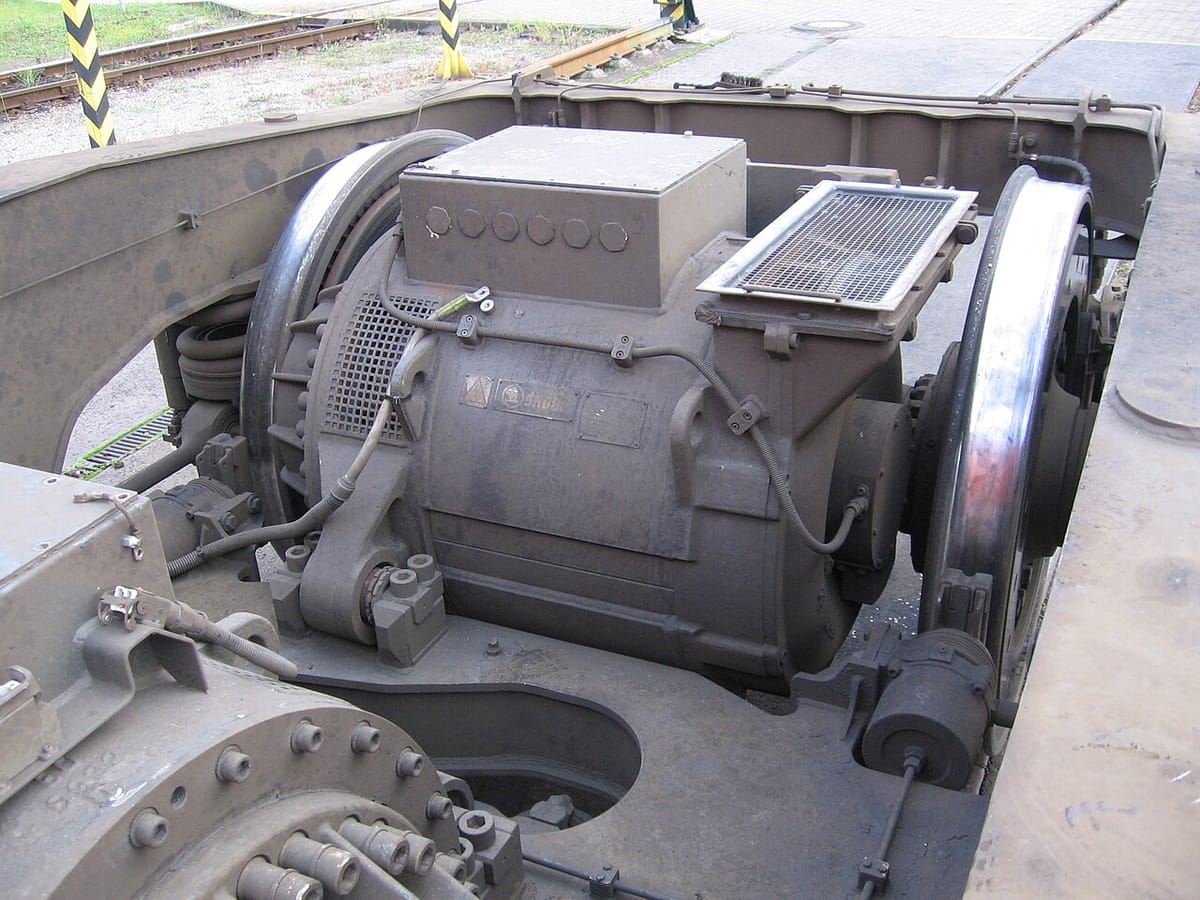
The standard covers the bogie frames of railway vehicles, including the transoms and the structural parts that transmit loads between wheelsets, suspension and car body. It covers both the frame itself and the attachments of the equipment mounted on it, such as dampers, motors, brakes and various supports.
The method applies to bogies for passenger vehicles, locomotives and wagons, with load values that vary according to the vehicle category.
Structure and logic of the standard
EN 13749 does not give a single formula: it explains how to build the structural specification of the frame, which loads to consider, how to combine them and with which criteria to accept the result. The annexes give reference loads for the different bogie categories, to be used when the customer does not provide its own values.
Loads can also be derived from on-track measurements on similar vehicles, if documented. The content of the annexes has changed between editions of the standard, so it is always advisable to state the reference edition in the specification.
Exceptional loads and service loads
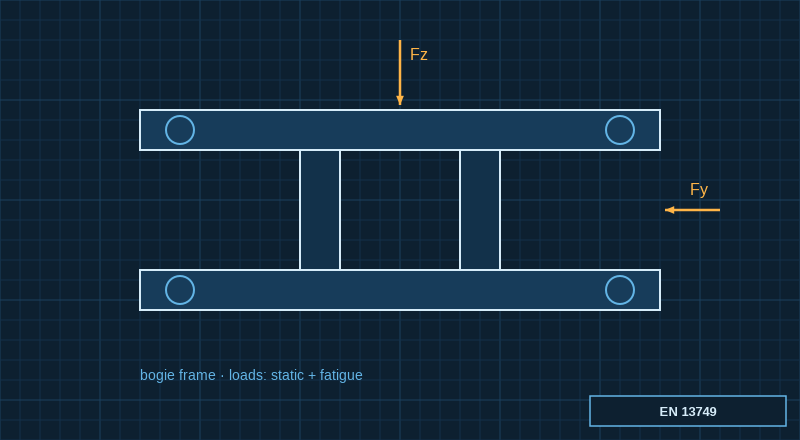
Exceptional loads are the maximum values that the frame must withstand on rare occasions without permanent deformation: vertical loads with the vehicle at maximum payload, high lateral and longitudinal forces, the effects of track twist, impacts and loads due to faults or particular manoeuvres.
Service loads are those repeated millions of times during the life of the vehicle: vertical oscillations, lateral forces in curves, track twist, traction and braking, vibrations of the mounted masses. They are combined into load cases representing typical running conditions.
Static and fatigue verification: calculation and tests
Verification is usually carried out in three stages. It starts with calculation, normally with a finite element model of the frame: with the exceptional loads you check that stresses remain below yield with the required margin; with the service loads you verify the fatigue strength of the parent material and above all of the welded joints, using recognised strength curves.
This is followed by the static test on the test rig, with strain gauges at the most highly stressed points to compare measurements with the calculation. Finally comes the fatigue test on the rig, with a number of cycles and load levels defined in the test programme. In some cases on-track measurements are added. Ranieri — Servizi di ingegneria carries out the static and fatigue calculation of the frame with the load cases of the standard; the rig tests remain the responsibility of equipped laboratories.
Documents to prepare
- Structural specification with bogie category, masses and loads adopted
- Calculation report with model, constraints, load cases and results
- Classification of the welded joints consistent with the fatigue verification
- Static test programme and report
- Fatigue test programme and report
Common mistakes and related standards
The most common mistakes are using the loads of a category different from that of the vehicle, neglecting the equipment attachments, assessing weld fatigue with nominal stresses without a method consistent with the curves used, and not aligning the test measurement points with the critical areas of the calculation.
EN 13749 is used together with EN 15085 for welding, EN 12663 for the car body and the standards on wheelsets and axle boxes. For joint fatigue, reference is often made to Eurocode 3 or to the international welding recommendations.
Frequently asked questions
Does EN 13749 give load values?
Yes, its annexes give reference loads for the different bogie categories. The customer can, however, specify its own values, including ones derived from on-track measurements, provided they are documented.
Is an FEM calculation enough to comply with EN 13749?
Normally not: the calculation must be confirmed by a static test and a fatigue test on the rig. For limited modifications to frames that have already been tested, a reduction in testing can sometimes be justified.
How is the fatigue of the frame welds verified?
The stress ranges of the service load cases in the welded areas are calculated and compared with recognised fatigue strength curves, consistent with the joint class according to EN 15085-3.
Does it also apply to freight wagon bogies?
Yes, the standard also covers wagon bogies, with reference loads specific to their category.
Summary for information only: the requirements are those of the official text of the standard in its current edition, available from the standards bodies. Ranieri — Servizi di ingegneria covers the mechanical side and does not carry out work reserved to members of a professional register.